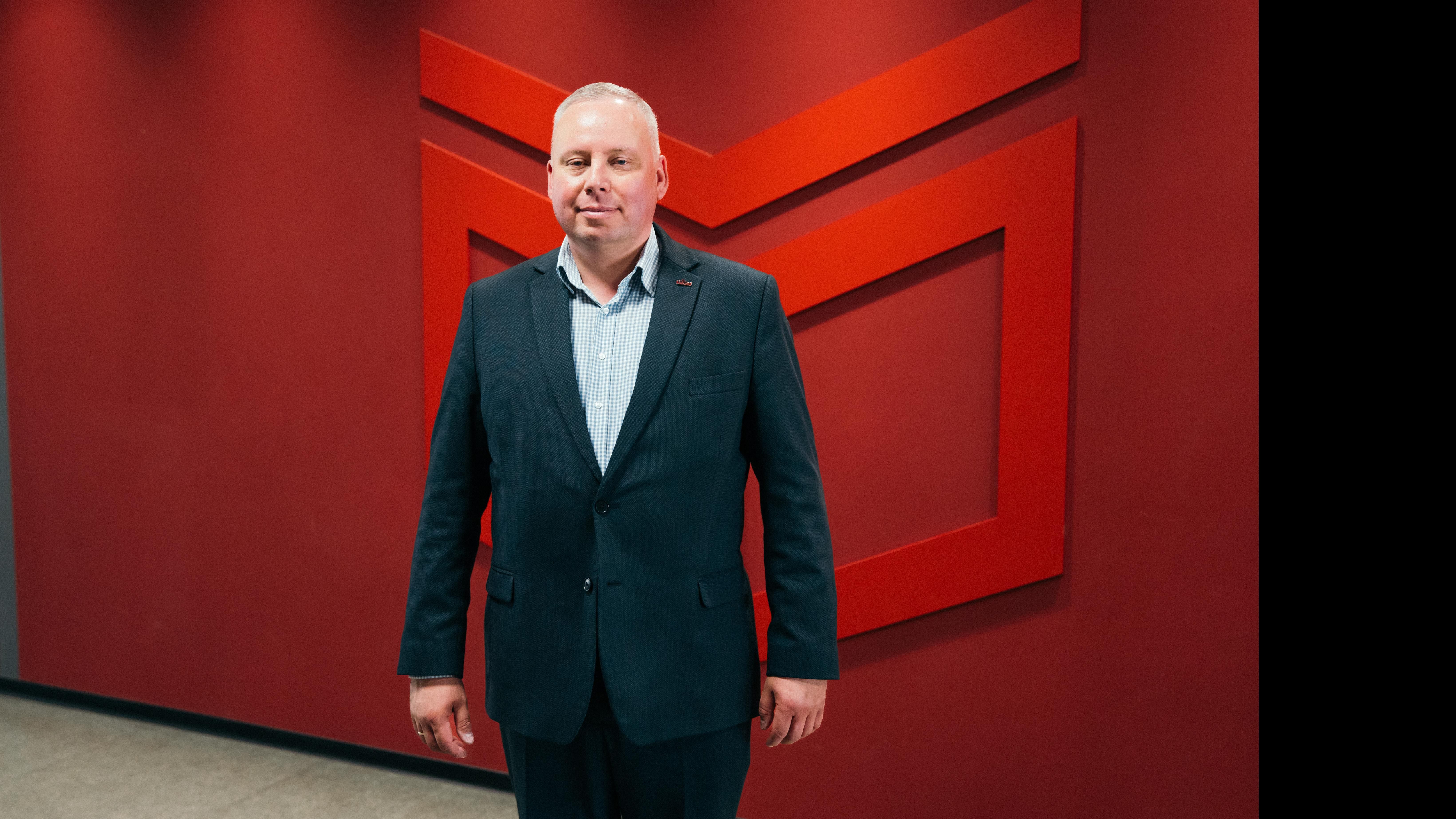
How local self-government in Lithuania is preparing for security challenges and how citizens are responding to russian hybrid attacks. We also discussed whether a full-scale russian aggression against the Baltic states is possible with Audrius Skaistys – President of the Lithuanian Atlantic Treaty Association, Vilnius City Municipal and Vilnius Region Development Council member, Lithuanian Riflemen's Union member, and Ivano-Frankivsk City Ambassador.
You recently gave a lecture on decentralization at King Danylo University. In Ukraine, we carried out a long-term decentralization campaign. Our hromadas (local communities) received resources and funding, which allowed them to initiate various projects. It was a success, but the full-scale war disrupted everything. In Lithuania, you have been more fortunate in this regard. What is the current situation with local self-government there?
We follow the model of other European Union countries. Year after year, Lithuania’s system is becoming more aligned and consistent with what you see across the rest of Europe. Naturally, the main stages of decentralization are already complete. While there is always room for improvement in certain areas, I only foresee minor adjustments in the future. The most significant changes have already been implemented; the system is established, it works well, and it will continue to function for years to come.
Currently, Lithuania faces similar threats and dangers as Ukraine. How does your local self-government react to this? How do you work on defense and address these security risks?
We see differences in how different municipalities react. Some of these differences are being addressed through legislative changes made to unify our approach. This is necessary because some municipalities don't want to face this changing reality, and they struggle to understand what is now essential for most of the population. While we certainly see this issue, we also have excellent examples of leadership from mayors and municipal councils who are very active and progressive in this regard. Based on what they have already achieved, they are the leaders in Lithuania when it comes to minimizing future losses and mitigating potential conflicts.
You represent the Lithuanian Riflemen's Union. What is the role of this organization in the country, and can we say it serves as a bridge between civilians and the army?
Yes. Our organization was founded 107 years ago, though it was later abolished during the Soviet period for being viewed as an anti-soviet and nationalistic organization. Today, it is primarily a patriotic and militarized organization that acts as a civilian support system for the armed forces. In the early stages of our development, we shared some historical commonalities with Ukrainian Sichovi Striltsi. However, we have now become much more technologically advanced in light armory – sometimes even more so than our regular armed forces. This is largely due to our extensive cooperation with Ukraine. We are actively gaining from your experience in this war, especially in the drone and anti-drone sectors. I know that our Riflemen's Union has signed agreements not only with Ukrainian drone manufacturers but also with training schools. Instructors from the Lithuanian Riflemen's Union have traveled to Ukraine to gain firsthand experience and then bring this expertise back to our members in Lithuania. It is a very active partnership, and in some areas, we are actually leading in Lithuania. Of course, the largest share of state funding still goes to the regular army rather than the Riflemen's Union, but we are also state-supported and receive allocations from the national budget.
Total Defense is the core strategy of Lithuania today. Speaking of civilians, are they ready to protect their country if necessary? Do people accept the possibility that russia could attack in some way?
I would say that, in general, there is a strong understanding within our society regarding these challenges and the risks that could arise very quickly in Lithuania, especially given the unpredictability of our neighbors, russia and Belarus. At the same time, we have created a system where you can gain practical knowledge about what to do when "Hour X" arrives. This system consists of the regular armed forces, the volunteer forces, and the Riflemen's Union. You can participate in any of these three organizations depending on your abilities and how much time you can dedicate.
We also have a conscription system, making military service mandatory for young people. We don't face a significant shortage of conscripts because many volunteers join willingly. In fact, we currently cannot accommodate everyone because we lack the facilities to house and train them, as our training grounds are not yet fully ready. Because of this, we are currently establishing three more training grounds in Lithuania, which will be used by our army as well as our NATO allies, since we train together. Of course, this system is becoming increasingly adapted to the challenges we face in the region. This shift accelerated with the war in Ukraine, though some experts had warned about these challenges much earlier, back when russia started the war in Georgia.
Regarding hybrid attacks, we know they have been happening for a long time. What is their current scale, and are people prepared to resist things like hostile psychological operations or saboteurs? Are citizens ready to counter these threats from russia?
You can never achieve full readiness, but in general, public awareness is becoming increasingly up-to-date. People are receiving more information from various sources. The primary source, of course, is our state institutions, whose main task is to explain these risks, but municipal authorities and volunteer organizations are also working on this. For instance, the Riflemen's Union –which is a non-governmental organization that receives state financial support – actively educates the wider public on how to counter and survive these hybrid threats.
This is crucial because some people still don't know what to do. Additionally, our infrastructure must be prepared; people need to know where the emergency shelters are located. While this information is provided to members of the Riflemen’s Union and most know what should be in a survival kit, not everyone actually follows through. Full preparedness is our ultimate goal, but it is something that can never be fully achieved. It is like a mirage - you can approach it, but never fully reach it.
And do you think a full-scale aggression against the Baltic states is possible?
Yes, we view this as a possible scenario. Of course, we want to avoid it, and we believe we can deter russia from taking this step. However, we also understand russia very well; it is an unpredictable neighbor. And when you have that kind of neighbor, there is always a possibility of full-scale aggression from their side.
You are an ambassador for Ivano-Frankivsk. Could you tell us more about your activities here and what they entail?
This activity actually started about 14 years ago with scientific conferences. Since then, our partnership has expanded significantly, covering many more topics over time. It has also evolved into official, institutional cooperation rather than just non-governmental initiatives. Thanks to those initial steps, we now have a formal agreement between the Vilnius Regional Development Council and the Ivano-Frankivsk Regional Council – so it is a signed and under implementation agreement between two state official bodies. I believe this cooperation will grow even stronger, especially in the post-war period, but we have to reach that period first.
Naturally, we are working towards this, and one of our primary goals is to help Ukraine bring this war to a victorious end. We truly believe this is possible. At the same time, we understand that the country's post-war recovery will be a massive undertaking. Right now, we are mostly focusing on humanitarian aid projects, but we are well aware that the vehicles we provide for humanitarian needs are also used by your armed forces, and we know this helps you achieve your goals in this war.
